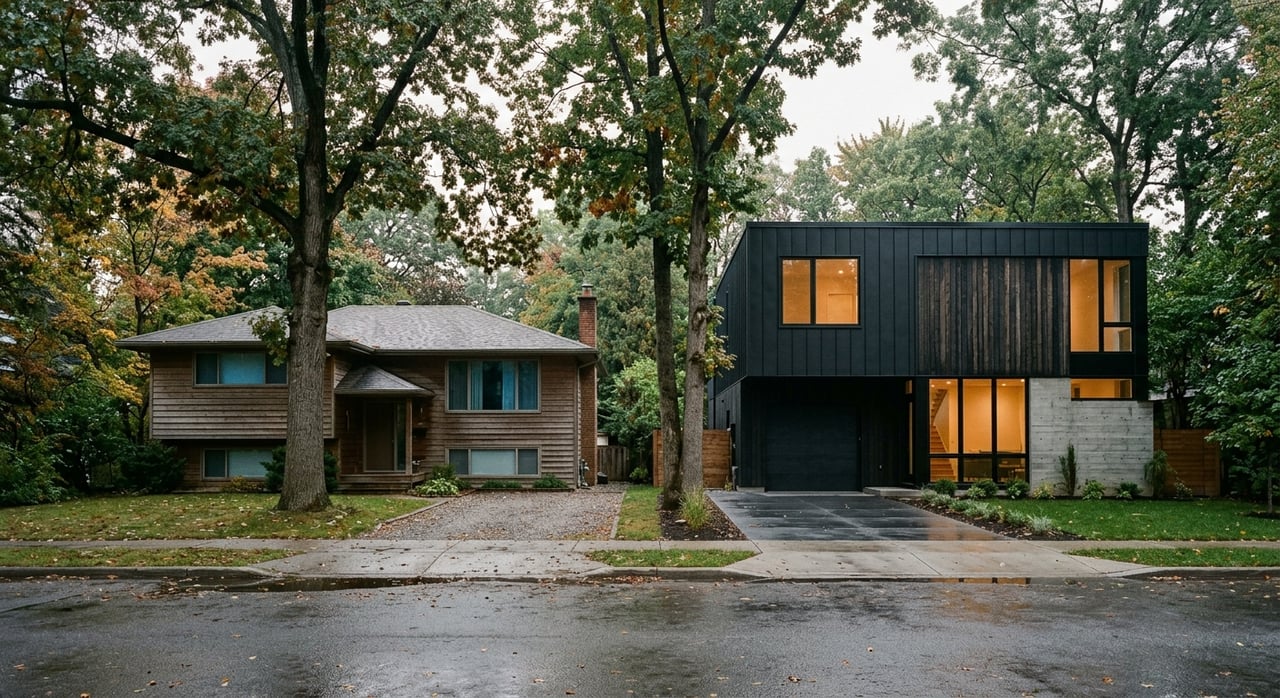
When a Clyde Hill home changes hands, are you really buying the house, or the land beneath it? In this market, that question matters more than most buyers and owners realize. If you are weighing a sale, a remodel, a teardown, or a new build, the numbers and site rules can change the answer fast. Here’s how to think through land value, redevelopment potential, and what actually drives decisions in Clyde Hill.
Why land value matters in Clyde Hill
Clyde Hill is one of the highest-value single-family markets on the Eastside. Zillow’s home value index for Clyde Hill was $4,133,450 as of March 31, 2026, and the same market snapshot cited in the research shows a fast-moving environment with high ownership rates and limited inventory.
That backdrop helps explain why land often carries so much weight. According to the city’s 2024 housing needs assessment, about 93% of Clyde Hill housing units are owner-occupied, more than 80% of the housing stock was worth over $2 million, and housing growth has been minimal since 2000. In a market with scarce supply and high home values, lot utility becomes a major part of pricing.
Older homes are also a meaningful part of the local inventory. The same assessment found that 44% of homes were built before 1970, while only 1% were built in 2020 or later. The report notes that most new construction has occurred through redevelopment of existing properties, which means tear-down and rebuild activity is part of the normal housing cycle here.
Why some lots are more valuable
In Clyde Hill, redevelopment potential is heavily shaped by zoning. The city’s R-1 zoning code requires a minimum lot area of 20,000 square feet, at least 100 feet of frontage, and at least 100 feet of depth.
The same code sets a 25-foot height cap, 30-foot front setbacks, 15-foot side setbacks on lots 15,000 square feet or larger, 35-foot rear setbacks, and a structural coverage limit of 30% of the building site. It also states that private-road or pipe-stem driveway area does not count toward minimum lot size, which can materially affect whether a property truly qualifies as buildable in the way you expect.
That is why two homes with similar square footage can have very different land value. A well-shaped lot with usable frontage and a cleaner building envelope may support a better replacement plan than an awkward lot with constrained dimensions. In many cases, the site is more important than the existing house.
How to spot a teardown candidate
A teardown candidate is not simply an older home. Usually, it is an older home where the land is worth far more than the structure, the existing improvements are dated or functionally limited, and the lot can support a stronger future use under current code.
Public listing and assessment examples help show that dynamic. A Clyde Hill property at 9703 NE 14th Street was marketed as “Value In Land,” which is the clearest possible signal that the lot was driving attention. Another example at 2060 90th Place NE showed 2024 assessed land value of $3.257 million versus improvement value of $599,000, meaning land represented about 84.5% of the assessed value.
That kind of ratio does not automatically mean demolition is the right answer. It does mean you should evaluate the property through a highest-and-best-use lens. In practical terms, you are asking whether renovation cost, holding cost, and code limits still justify keeping the structure in place.
Why not every older home should be torn down
It is easy to assume that age alone makes a house obsolete, but the data does not support that. Some older homes can still command strong value when they are substantially updated and sit on attractive lots.
That is important if you already own an older home in Clyde Hill. If your house has been renovated, has a layout that still works for today’s buyers, and sits on a desirable site, it may compete well without a full teardown. The better question is not “Is the house old?” but “Does the current structure maximize the lot’s value compared with the alternatives?”
New construction is already active
Teardown and rebuild activity is not just a theory in Clyde Hill. The city’s December 2025 permit report showed 12 new homes issued in 2025 with a total value of $30.74 million, plus 10 additional new-home permits that were still pending at that time.
The same report also showed demolition activity connected to redevelopment. It listed both a new single-family permit and a demolition permit at 3011 92nd Ave NE, along with a demolition permit at 8811 NE 15th Pl. That pattern supports what local owners and buyers already see on the ground: replacement homes are a real and active part of the market.
New rules create more options
Clyde Hill is still a highly regulated place to build, but recent code changes have expanded what may be possible on some sites. Under the city’s current code, cottage housing is now listed as a permitted middle-housing type in the R-1 district, and a June 2025 ordinance allows up to two ADUs on any lot that permits single-family dwellings.
Those updates do not erase the practical limits. Cottage housing still requires 20% open space, and middle-housing proposals go through administrative review. Even so, these changes mean that some owners may have alternatives between “leave it alone” and “tear everything down for one replacement home.”
Lot size can change the math
The city’s 2024 comprehensive plan offers another useful clue about redevelopment pressure. Its capacity analysis noted a net loss of units from 2010 to 2023 because of economic lot consolidation rather than a construction barrier.
The same analysis said 48% of RL lots exceed double the minimum lot requirement, which creates a financial incentive to divide land. That does not mean every oversized lot will be split, or that every split will be feasible. It does mean lot dimensions and land economics are central to understanding value in Clyde Hill.
What owners should review first
If you own a home in Clyde Hill and are deciding whether to sell as-is, remodel, or pursue redevelopment, start with a few core questions:
- How does the assessed land value compare with the improvement value?
- Does the recorded lot size still meet code minimums after excluding any private-road or pipe-stem area?
- How do frontage, depth, setbacks, height limits, and structural coverage affect the buildable envelope?
- Are there site constraints, topographic issues, or other limitations that could reduce utility?
- Would a renovation preserve enough value, or is the lot capable of supporting a materially stronger outcome?
This is where analytical underwriting matters. A property may look like a teardown at first glance but pencil better as a premium resale with targeted updates. Another may look livable enough, yet the lot may be the real asset.
What buyers and builders should verify
If you are buying with redevelopment in mind, do not rely on assumptions. Verify the recorded lot size, frontage, and shape first, then compare them against the R-1 development standards.
You should also confirm whether any area you are counting toward lot size is excluded under code, especially if the lot is accessed by a private road or pipe-stem configuration. Then look at the likely building envelope after setbacks, height, and coverage limits are applied. A large lot on paper is not always a large lot in practice.
For small builders and analytical buyers, the opportunity in Clyde Hill is usually not “cheap land.” It is finding a property where the site can support a more valuable use than the current house, and where the numbers still work after acquisition, design, permits, and carry costs.
The bottom line on Clyde Hill land value
In Clyde Hill, the house and the land often tell two different stories. The house may be dated, modest, or highly improved, but the lot is what often determines the ceiling for value. That is especially true in a market defined by large lots, high prices, limited new inventory, and an established pattern of redevelopment.
If you are trying to decide what your property is really worth, or whether a teardown, remodel, or new build strategy makes sense, you need more than a quick online estimate. You need a clear read on land value, site constraints, and market positioning. If you want a data-driven opinion on your Clyde Hill property, connect with Josiah Willis for thoughtful guidance on valuation, redevelopment potential, and next steps.
FAQs
What makes land value so important in Clyde Hill real estate?
- Clyde Hill has very high home values, limited housing growth, and a large share of older homes, so the lot’s size, shape, and redevelopment potential can drive a major portion of total property value.
When is an older Clyde Hill house a teardown candidate?
- An older Clyde Hill home is more likely to be a teardown candidate when land value greatly exceeds improvement value, the home is functionally dated, and the lot can support a better use under current R-1 rules.
What zoning rules matter most for Clyde Hill new builds?
- The key Clyde Hill R-1 rules include minimum lot size, frontage and depth requirements, setbacks, the 25-foot height cap, and the 30% structural coverage limit.
Can you add value in Clyde Hill without a full teardown?
- Yes. Depending on the property, a renovation may preserve strong value, and current city rules also allow added-unit options such as ADUs on lots that permit single-family dwellings.
What should a buyer verify before buying land or a teardown in Clyde Hill?
- A buyer should verify recorded lot size, frontage, whether any private-road or pipe-stem area is excluded from minimum lot calculations, and whether site conditions reduce the buildable envelope.