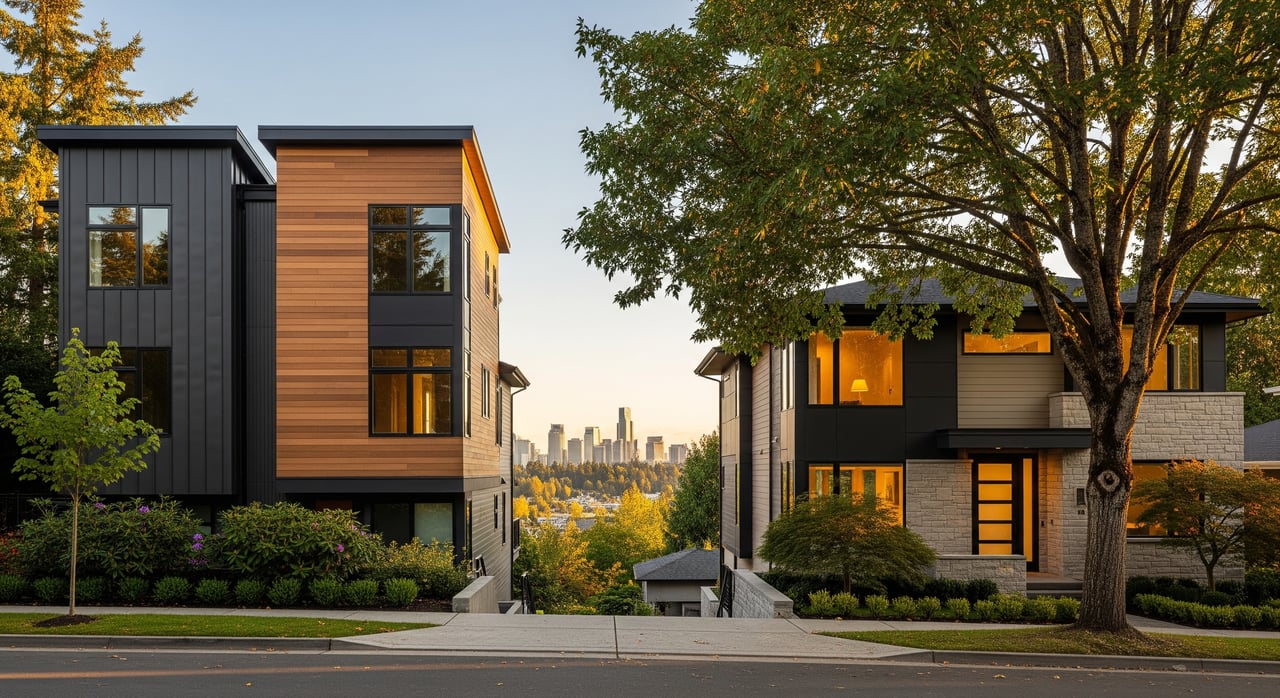
Thinking about trading up but unsure whether a Bellevue townhome or a single-family home fits best? You want more space and a smart long-term move without taking on surprises in cost or maintenance. In this guide, you’ll compare both options through a Bellevue lens so you can decide with confidence. We’ll cover lifestyle fit, total monthly costs, HOA and financing factors, and a clear checklist to help you choose. Let’s dive in.
Bellevue market context for move-up buyers
Bellevue’s housing choices reflect strong Eastside employment and improving regional transit. With East Link light rail now connecting Bellevue, homes near stations and the downtown core see steady interest from buyers who value commutes and walkability. At the same time, many established neighborhoods remain primarily single-family, with larger lots and more privacy.
New mixed-use development in downtown and the Bel-Red corridor has added more townhome and multifamily options in certain submarkets. In built-up areas, townhome infill often replaces larger lots or emerges on subdivided parcels, which changes local supply. Buyer demand varies by micro-neighborhood, so product type and location work together to shape value and resale.
Townhome vs single-family: key differences
Space and layout
- Townhomes prioritize efficient, stacked floor plans that can deliver multiple bedrooms in a compact footprint.
- Single-family homes often offer wider layouts, more continuous living space, and options for single-level living.
- If you need a guest suite or multi-generational flexibility, single-family homes typically create more options for separation and privacy.
Outdoor space
- Townhomes usually offer patios, small yards, or rooftop decks, with some shared green space.
- Single-family homes typically provide larger private yards, room for gardens, play areas, or future additions.
- If you value an outdoor project list or potential for an accessory dwelling unit, a single-family lot may fit better.
Storage and parking
- Many newer Eastside townhomes include attached one- or two-car garages, but off-street storage can be limited.
- Single-family homes often have larger garages, sheds, and attic or basement storage.
- Consider your vehicle count, gear storage, and the street parking rules in each neighborhood.
Maintenance and time costs
- Townhomes often have lower private exterior maintenance, and your HOA may handle roofing, siding, and landscaping of common areas.
- HOA dues are a recurring cost and can rise if shared components need work; review reserves and any special assessment history.
- Single-family homes put you in charge of exterior systems and landscaping, which adds time and budget but gives you control. In Bellevue, plan for drainage management, mature tree care, and, on slopes, retaining wall upkeep.
Privacy and noise
- Townhomes share at least one wall, so soundproofing and construction quality matter for comfort.
- Single-family homes usually offer more setback and yard buffers, which can increase privacy and reduce noise transfer.
Ownership structure and rules
- Bellevue townhomes may be fee-simple with a light-touch HOA or condo-style with shared ownership of the building envelope.
- Fee-simple townhomes often finance like single-family. Condominiums can require project-level approvals, which can affect lending timelines.
- Always review HOA documents for dues, reserves, insurance coverage, rental limits, pet policies, and exterior modification rules.
Resale and appreciation dynamics
- Single-family homes historically draw the widest buyer pool in Bellevue because land and lots are scarce.
- Townhomes can be very marketable near transit and services, especially for buyers seeking lower maintenance with private entries.
- For townhomes, HOA health, construction quality, and location drive value. For single-family, both the structure and land contribute to appreciation potential.
Flexibility and future options
- Single-family homes often allow additions, garage conversions, or ADUs, subject to Bellevue zoning and permitting.
- Townhomes typically have limited expansion options and may restrict exterior changes.
- If aging in place is important, single-level single-family homes are usually easier to navigate than multi-level townhomes.
Location and lifestyle fit in Bellevue
Near transit and downtown
If you want to walk to dining and reach major employers with minimal drive time, townhomes and condos near East Link stations and downtown Bellevue are common options. You will find private entries and newer finishes with a smaller maintenance footprint.
Established single-family areas
Neighborhoods with predominately detached homes often offer larger lots, mature landscaping, and more privacy. These areas can suit buyers who want room to spread out, host, garden, or plan future improvements.
Middle-ring neighborhoods
Areas between the core and the outer edges can offer a mix of both product types. Evaluate commute routes, bike and walk connections, and assigned schools across your short list to see where your day-to-day life runs best.
Compare total monthly cost, apples to apples
Look beyond list price and compare your carrying cost for each property. Build a side-by-side view:
- Mortgage principal and interest at your quoted rate
- Property taxes based on assessed value
- Homeowner’s insurance
- HOA dues, if any, and what they cover
- Estimated maintenance budget (higher for single-family)
- Commuting costs in time and dollars
Sample side-by-side framework you can reuse
Create two columns, then add each line item. Your goal is a monthly total you can compare at a glance.
- Mortgage: price minus down payment, at your lender’s rate and term
- Taxes: annual property tax estimate divided by 12
- Insurance: monthly estimate from your insurer
- HOA dues: monthly amount
- Maintenance: monthly reserve for repairs and upkeep
- Total monthly cost: sum of all above items
Tip: For a townhome, include HOA dues and any known special assessments. For a single-family home, increase your maintenance reserve to account for roof, exterior, drainage, and landscaping.
A simple decision framework for move-up buyers
1) Define your priorities
- Yard size vs low-maintenance living
- Privacy and noise buffer vs proximity to services and transit
- Importance of assigned schools
- Need for future expansion or an ADU
- Budget ceiling including total monthly carrying costs
2) Gather property-level data
- Price and price per square foot
- Interior square footage, bed/bath count
- Lot size for single-family or footprint/common areas for townhomes
- Parking and garage count, plus street parking rules
- HOA dues, reserves, insurance coverage, and any assessment history
- Age of roof and major systems, foundation type, slope or drainage notes
- Permit history for recent renovations
3) Calculate your monthly total
- Mortgage estimate, property taxes, insurance, HOA dues, maintenance, commute costs
4) Check marketability for resale
- Days on market and sale-to-list ratio for close comps by product type
- Buyer pool signals in the micro-neighborhood
- Proximity to parks, services, and transit
- Pipeline of new townhome projects that could be future competition
5) Confirm financing path
- Identify fee-simple townhome vs condominium and lender requirements
- Check for any special districts that affect lending or insurance
6) Complete HOA and legal due diligence
- Request full HOA packet: budgets, minutes, reserve study, CC&Rs, insurance
- Ask about litigation or unresolved claims
7) Run the lifestyle test
- Visit at different times of day for noise and traffic
- Test commute during rush hour
- Walk the block for daylight, tree canopy, and how you would use the outdoor space
Buyer scenarios: which choice fits whom
- Busy professionals who value transit access and lower upkeep often lean toward a townhome near stations or downtown.
- Growing households seeking more privacy, a yard, and room for future projects often prefer a single-family home.
- Buyers priced out of larger single-family homes in specific neighborhoods may find townhomes a strategic way to stay close to work and services.
- Empty nesters downsizing from larger homes may favor townhomes with private entries and fewer exterior tasks.
What to look for in HOAs and inspections
- Dues and increases over time, reserve study date and balance, and what the master insurance covers.
- Rental limits, parking rules, pet policies, and exterior modification approvals.
- For townhomes, ask about building envelope maintenance responsibility and any planned capital projects.
- For single-family homes, evaluate roof age, siding, windows, drainage, and landscape grading. On sloped sites, inspect retaining walls and water management.
Quick decision matrix
| Priority | Townhome | Single-Family |
|---|---|---|
| Low exterior maintenance | Strong fit | Requires more time or budget |
| Maximum privacy and yard | Limited | Strong fit |
| Proximity to transit and services | Often strong near core | Varies by neighborhood |
| Flexibility for additions/ADU | Limited | More options, check zoning |
| Simplified insurance and exterior | Often via HOA | Owner-managed |
| Broadest resale buyer pool | Varies by submarket | Historically broad |
Next steps
- Get pre-approval and confirm whether a target townhome is fee-simple or a condominium.
- Ask for the HOA packet early and review reserves, minutes, and insurance with your advisor.
- Have your agent pull micro-neighborhood comps for both product types and run a side-by-side monthly cost.
- Tour at varied times to test commute, noise, parking, and light.
If you want a data-driven, Eastside-specific comparison for your short list, connect with Josiah Willis to request your free home valuation and a tailored plan.
FAQs
Will a Bellevue townhome cost less than a single-family home?
- Generally, townhomes have lower purchase prices and price per square foot than similar single-family homes, but include HOA dues and compare total monthly costs side by side.
Are townhomes riskier to resell than single-family homes in Bellevue?
- Single-family homes often benefit from land scarcity and a broad buyer pool; well-located townhomes near transit and services can also be highly marketable.
Can I get a conventional mortgage for a Bellevue townhome?
- Many fee-simple townhomes finance like single-family homes; condominiums may require project-level approvals, so confirm requirements with a lender early.
Do HOAs limit rentals or short-term rentals in Bellevue?
- Many HOAs restrict rentals and often limit short-term rentals; review CC&Rs and city rules before you buy.
Which Bellevue areas lean toward townhomes or single-family homes?
- Downtown and Bel-Red tend to offer more townhomes and multifamily choices; West Bellevue, Bridle Trails, and established neighborhoods are often dominated by detached homes.
Should I factor ADU potential into my decision in Bellevue?
- Yes. Single-family homes generally offer more ADU potential, subject to Bellevue zoning and permits. Townhomes usually have tighter limits on expansions.